
-Guest Blog-
Passing Down the Family Cabin:
Questions Before Meeting with an Attorney
Written By: Attorney Elizabeth B. Taylor, Walden, Neitzke & Taylor, s.c.
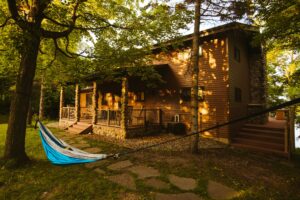
Passing down a family cabin is more than transferring property – it’s about preserving traditions, relationships, and values. By addressing questions of ownership, management, funding, and flexibility ahead of time, families can avoid unnecessary tension and create a structure that works for everyone. Consider an example:
John and Martha own a cabin on a popular lake “Up-North”. They and their three daughters, Susan, Cathy and Rachel, enjoy the property immensely and hope to keep the cabin in the family for generations. What should John and Martha consider in this regard?
Who do John and Martha want to be able to enjoy the property?
This is probably the easiest question to consider, as the answer is likely self-evident. For John and Martha (and probably most in this situation), their goal is to ensure all descendants have the opportunity to use and enjoy the cabin.
Who should control the property?
We need someone who will be responsible for making decisions about the property, its maintenance and upkeep, and its use. But this is certainly not all of John and Martha’s descendants – that would be entirely too cumbersome. Rather, we need an individual or a small number of people designated to manage the property and a way to select their replacements.
How should the property be owned?
While it may be possible for Susan, Cathy and Rachel to own the property titled to them jointly, this will not be manageable for the next generation. Susan currently has no children, but Cathy has two children and Rachel has three. Having five co-owners of the property would be challenging. Consider what would need to happen with the ownership if one of the co-owners were to get divorced, die or declare bankruptcy.
It would be preferable to own the property in an entity – typically either a trust or an LLC. Both structures are useful and can be an appropriate vehicle. Typically, an LLC can be easier to change in the future, but that may be a benefit or a disadvantage depending on the situation. If a trust is used, while it may be created to be irrevocable, it would still be feasible to give a few people the ability to amend the trust in the future if they were all to agree.
How will the property be funded?
All properties will require some funding in the future. The need for cash may include real estate taxes, insurance, utilities and upkeep/maintenance. The options for funding the property include:
1 – Cash upon Creation or Transfer – It’s often a good plan to have at least some funding initially. This will allow the future generations some leeway in determining where ongoing funding will come from. Life insurance for the senior generation is a common source of the initial funding. This will likely run out at some point and an alternative will be needed.
2 – Gift of Income-Producing Asset – The senior generation could fund the entity holding the property with an asset that will generate future income. Perhaps this is a stock portfolio that is generating dividends. While this is ideal from a funding standpoint, caution is warranted because the income generated will be subject to income tax. This can get a bit messy, especially if working with a trust.
3 – Contributions – If all else fails, the future generations will need to contribute to the funding of the property. For this to happen, the people in those future generations will need to be willing to contribute – something worth considering upfront. Will all individuals in future generations be able and/or willing to contribute? To the same degree?
Generally speaking, it makes sense for the funding to be held in the same entity where the property will be owned.
What if someone wants “out”?
For John and Martha, this will be an important consideration. While Susan loves the cabin, she recently moved to Ohio and isn’t able to visit there very often. Given that she also has no children, she may decide later that she doesn’t want to have any role with the cabin, especially if she is required to make contributions. She would have the option to simply not contribute, and therefore not use the cabin, but does she receive anything in exchange? If yes, where does the funding for this come from? What does this look like? Or is she able to “walk away” but not receive anything in exchange?
When to do this planning?
While it may make sense for John and Martha to create (and fund) the entity, it would be worth at least considering pushing the planning off a generation. If John and Martha trust their daughters and are confident they would engage in this planning (and would have sufficient resources to do so), it may make sense to not create the entity now. The property can likely be managed by Susan, Cathy and Rachel without the need for a formal entity, assuming the three get along well. By pushing the planning off, John and Martha’s daughters will know more when living in the property management stage and therefore can create better plans then.
With some careful consideration and appropriate planning, John and Martha will be able to ensure the cabin is a uniting force for their family well into the future.